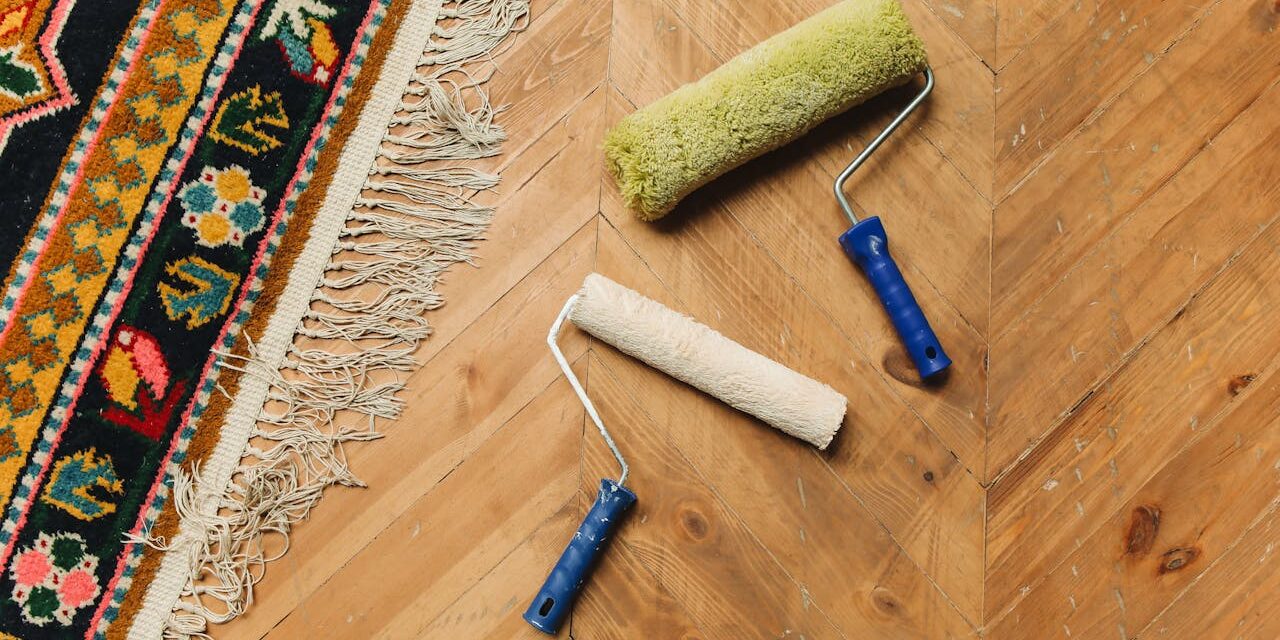
You’re halfway through painting your bedroom in the calming sage green you saw on Pinterest. The roller is doing its job beautifully on the walls, but then your elbow catches the paint tray, and suddenly there’s a puddle of ‘Misty Morning’ soaking into your cream carpet.
Before you spiral into a full-blown panic or start Googling ‘how much does a new carpet cost,’ take a breath.
Paint spills are rarely permanent disasters if you act quickly. So, let’s sort this out together.
Blot First, Panic Later
Your instinct might be to grab a cloth and start scrubbing furiously. But trust us—this will only make things worse.
Rubbing fresh paint drives it deeper into the fibres and spreads it across a wider area. Instead, grab some kitchen roll or a clean white cloth and gently blot the spill.
Press down firmly but carefully, lifting the paint from the surface rather than grinding it in. Work from the outside edges towards the centre to avoid expanding the stained area.
If there’s a lot of paint, you might need to use several sheets of kitchen roll. Keep blotting until you’re not picking up any more colour. You won’t get it all at this stage, and that’s fine. You’re just removing the bulk before treating the area.
Identify the Paint Type
Before you start applying anything, you need to know whether you’re dealing with water-based or oil-based paint. This dictates everything that comes next.
Check the paint tin if it’s still nearby. Water-based paints have ‘water clean-up’ or ‘acrylic’ written somewhere on the label.
However, if the label recommends using white spirit, mineral spirits, or turpentine for clean-up, it’s oil-based.
If the tin is nowhere to be found, you can try a simple test. Dampen a cotton bud with water and dab it on a bit of the spilt paint. If it softens or smudges, it’s water-based. If nothing happens, you’re dealing with the oil-based variety.
Break It Down with Soap
If you’ve confirmed it’s water-based paint, you’re in luck. This is the easier scenario.
Mix a small amount of washing-up liquid with warm water in a bowl. You want it sudsy but not overflowing with bubbles.
Then, dip a clean white cloth into the solution, wring it out so it’s damp, and gently dab at the stain.
Work slowly, switching to a clean part of the cloth as you lift the paint. You should see the colour transferring onto the fabric fairly quickly.
Avoid the urge to use too much water. Saturating your carpet can cause the paint to spread underneath or even invite mould later.
If the stain is stubborn, try adding a tablespoon of white vinegar to your cleaning solution. The acidity will help break down the paint without damaging your rug.
Use Solvents the Right Way
Oil-based paint requires a different strategy and a bit more caution.
You’ll need white spirit or a specialist paint remover, both of which you can find at most DIY shops across the UK.
Before you apply anything to the main stain, though, test it on a hidden bit of your carpet first, like under the sofa or in a corner.
If you haven’t noticed any colour changes after your patch test, apply a small amount of white spirit to a clean cloth and gently dab at the paint.
Work from the edges inward, and be patient. It’ll take longer than it would with water-based paint, but you should start seeing results.
Once the paint begins lifting, switch to a fresh part of the cloth to avoid putting paint back down. Keep going until the stain is gone or as faded as you can get it.
Afterwards, clean the area with warm soapy water to remove any chemical residue. White spirit leaves behind an oily film that’ll attract dirt if you don’t rinse it properly.
Loosen Dried Paint
If the paint has already dried by the time you’ve noticed it, you’ll need a slightly different technique.
Grab a soft-bristled brush, like an old toothbrush. Apply your cleaning solution (soapy water or white spirit, depending on the paint type) to the stain and let it sit for a minute to soften the paint.
Then, gently work the brush in small circular motions over the affected area. You’re trying to loosen the paint from the fibres without damaging them. Don’t press too hard, though, or you’ll end up with a frayed rug.
As the paint loosens, blot it away with a clean cloth. Repeat the process until the stain lifts. It might take a few rounds, especially if the paint has been there for a while.
Rinse and Dry Your Carpet
Congratulations—you’ve removed the paint, and the hard part is over. But there’s still one final step left.
Any cleaning solution left on your rug will attract dirt like a magnet. So, dampen a fresh cloth with plain water and blot the cleaned area well to remove all traces of soap or white spirit.
Then, grab a dry towel and press it firmly over the damp spot to absorb as much moisture as possible. If you’ve got a fan, point it at the area to speed up drying. You can also open a window if the weather is decent.
Avoid walking on the spot until it’s completely dry. Damp fibres are more fragile and prone to damage. Plus, you don’t want to track dirt onto your freshly cleaned patch.
Call in the Experts When Needed
Sometimes, despite your best efforts, the stain just won’t lift completely.
If you’re dealing with a large spill, an expensive rug, or paint that’s been there for ages, it’s time to bring in professional home carpet cleaning services.
They’ve got industrial-grade equipment and specialised products that can tackle stains DIY methods can’t touch.
A professional clean also gives your entire carpet a refresh, removing dirt and grime you didn’t even know was there. It’s worth doing once a year anyway, and even more so if you’re in the middle of a paint disaster.
Stop It from Happening Again
After you’ve dealt with one paint spill, you probably don’t fancy a sequel. Luckily, a few small habits can prevent this scenario altogether.
- Add a protective layer. Before you crack open the tin, cover your carpet with dust sheets or plastic sheeting. And tape the edges so they stay put while you move around.
- Keep the paint somewhere safe. Don’t balance the tin on a windowsill or perch the tray on the arm of a chair. Set everything on a flat, stable surface well away from your rug, so you’re not one elbow away from disaster.
- Get your rescue kit ready. Keep some kitchen roll, cloths, washing-up liquid, and a bowl of water within arm’s reach before you start. If something does spill, you’ll be able to act immediately instead of sprinting to the sink in a panic.
Conclusion
Your carpet doesn’t have to bear the permanent scars of your decorating ambitions. Whether it’s a fresh splatter or a dried spill you’ve just discovered behind the bookshelf, you can rely on our tips to sort it out.
Now, you can get back to your painting project with a bit more confidence. Just maybe move that paint tray a bit further from your carpet this time.