British men are buying smaller suits, with new sales data revealing a striking shift in waist sizes.
Figures newly released by online menswear specialist Dobell show that the 34-inch waist has overtaken the 38-inch waist to become its bestselling size in tuxedo trousers.
Just two years ago, the retailer sold almost as many pairs in a 38-inch waist as in a 34-inch. Today, sales of 34-inch tuxedo trousers are 153% higher than those of size 38.
The findings offer a snapshot of changing body shapes, as weight-loss medications such as Mounjaro and Wegovy become more widely used by men.
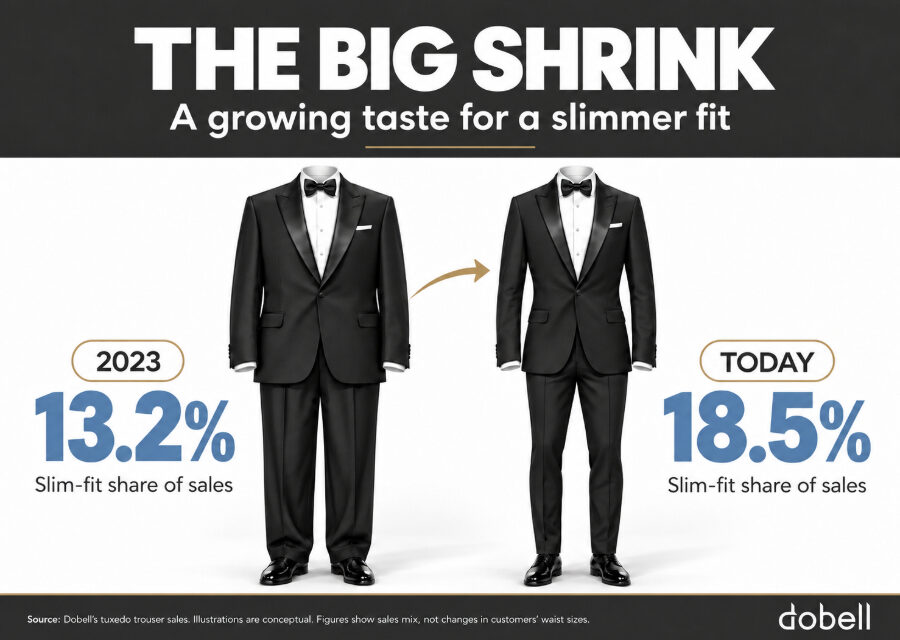
The shift is also reflected in the cut of the trousers men are buying. Dobell’s newly released figures show that slim-fit tuxedo trousers now account for 18.5% of sales, up from 13.2% in 2023. That means almost one in five pairs sold is now slim-fit, compared with around one in eight three years ago.
Mike Dobell, founder of Dobell, said: “The change in the most popular waist size is striking. Two years ago, sizes 34 and 38 were selling at almost the same level, but the gap between them has grown considerably.
“Clothing sizes are one way of seeing how people’s bodies and buying habits change over time. When someone loses weight, it can also mean their existing wardrobe no longer fits as it once did, so they may need to rethink what they wear.”
Dobell’s findings come as research from PwC suggests the trend could have wider implications for fashion retailers. Its research, published in June 2026, found that 42% of people taking GLP-1 weight-loss medication are spending more on clothing and footwear. Among those spending more, almost three-quarters (74%) said they needed new clothes because of weight loss or changes in size.
And the spending is not limited to everyday essentials. More than one in five (22%) of those increasing their clothing spend are splashing out on occasionwear.
PwC’s research found that almost one in ten UK adults had used GLP-1 medication, including both current and former users.
As more consumers reassess their wardrobes following changes in weight and body shape, retailers could see further demand for replacement clothing, tailored formalwear and outfits for special occasions.