We’re starting to move into the cooler months, and while most wasp colonies have died off by this time, you may still find a stray queen or wasp nest around your home or garden.
When finding a wasp nest at this time, it’s easy to presume it’s long abandoned, but before you jump straight into removal here’s some considerations to take first.
Are wasps still around in winter?
All worker wasps, males and the old queen die off in the autumn, meaning a decline in wasp activity and the abandonment of old nests. These nests are not re-used in the next lifecycle.
Only the newly mated, fertilised queen wasps survive the winter. They enter a dormant, sleep-like state called diapause. So, while there are still wasps around in winter, they’re not active and they certainly do not appear in colonies, like in the summer.
The new queen may find shelter in undisturbed places around your property like log crevices, wall voids, sheds and attics. They’ll stay here until spring, when the weather warms up, to begin a new nest.
How do you know if a wasp nest is active?
If you find a nest on your property don’t assume it’s inactive just because the weather is cooler. Here’s a few things to consider before taking action on removing the nest from your home.
Time of the year
While mild weather doesn’t immediately mean the nest isn’t being used, if you find the nest between November and January it’s highly unlikely there are any wasps still using it.
Only new queen wasps survive this period and they are hibernating in a new place as old nests are never re-used.
Size of the nest
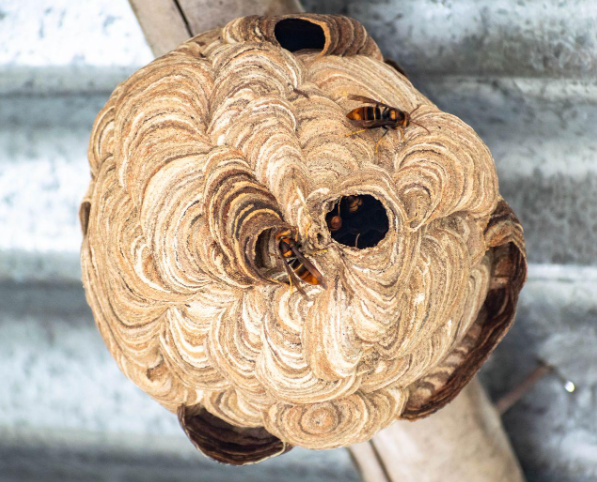
Because wasps construct their nests gradually, if the nest is increasing in size, this is a sign it’s still active. An active nest is usually large with a layered appearance.
Inactive nests are no longer being worked on, so they don’t show any growth and can look worn and damaged.
Noises from the nest
When you’re inspecting the nest you’ll hear the wasps buzzing around inside if they’re in there.
The noise will grow louder when the wasps are agitated, so if you’re near the nest and buzzing increases they’re warning you off.
Is it safe to remove a wasp nest in winter?
In peak winter you’re very unlikely to have an active wasp nest in your home. But before you attempt any kind of removal yourself you should check for any kind of activity.
Agitated wasps can be dangerous, so it’s best not to approach a wasp if you can’t guarantee it’s completely abandoned.
When should I call a professional?
Although the lack of wasps makes the removal job easier, there are still some occasions that call for a professional.
Visible nests
Old wasp nests look papery, worn and are generally not very attractive. If it’s located at a visible spot on your property, having it removed can become necessary to get your house looking better.
Wasp nests can also trap damp, become a fire hazard, and attract other pests. Just because there’s no wasps inside doesn’t mean you should leave it be.
Hard-to-reach spaces
To remain undisturbed and safe from predators, wasps build their nests high up, often in roof cavities, attics and trees. This can make them difficult to reach and remove safely.
Even if the nest is empty, it’s best to call a professional for wasp removal in awkward spaces to avoid putting yourself in harm’s way.
Uncertainty about activity
Around the end of summer, when the weather is still warm, it’s difficult to tell for sure if a wasp nest is active or not. For sheltered nests in particular there may be wasps lasting until later than usual.
If you have any doubt whether a wasp’s nest is inactive, call a wasp removal specialist to take a look.
Final thoughts
Dealing with a wasp nest in winter is easier than in summer, because of the smaller colonies. After their peak season activity slows and numbers reduce, wasp removal is less of a safety risk.
However, when the nests are in hard-to-reach spaces or you’re not confident in carrying out the removal yourself it’s always best to call a pest control expert.